


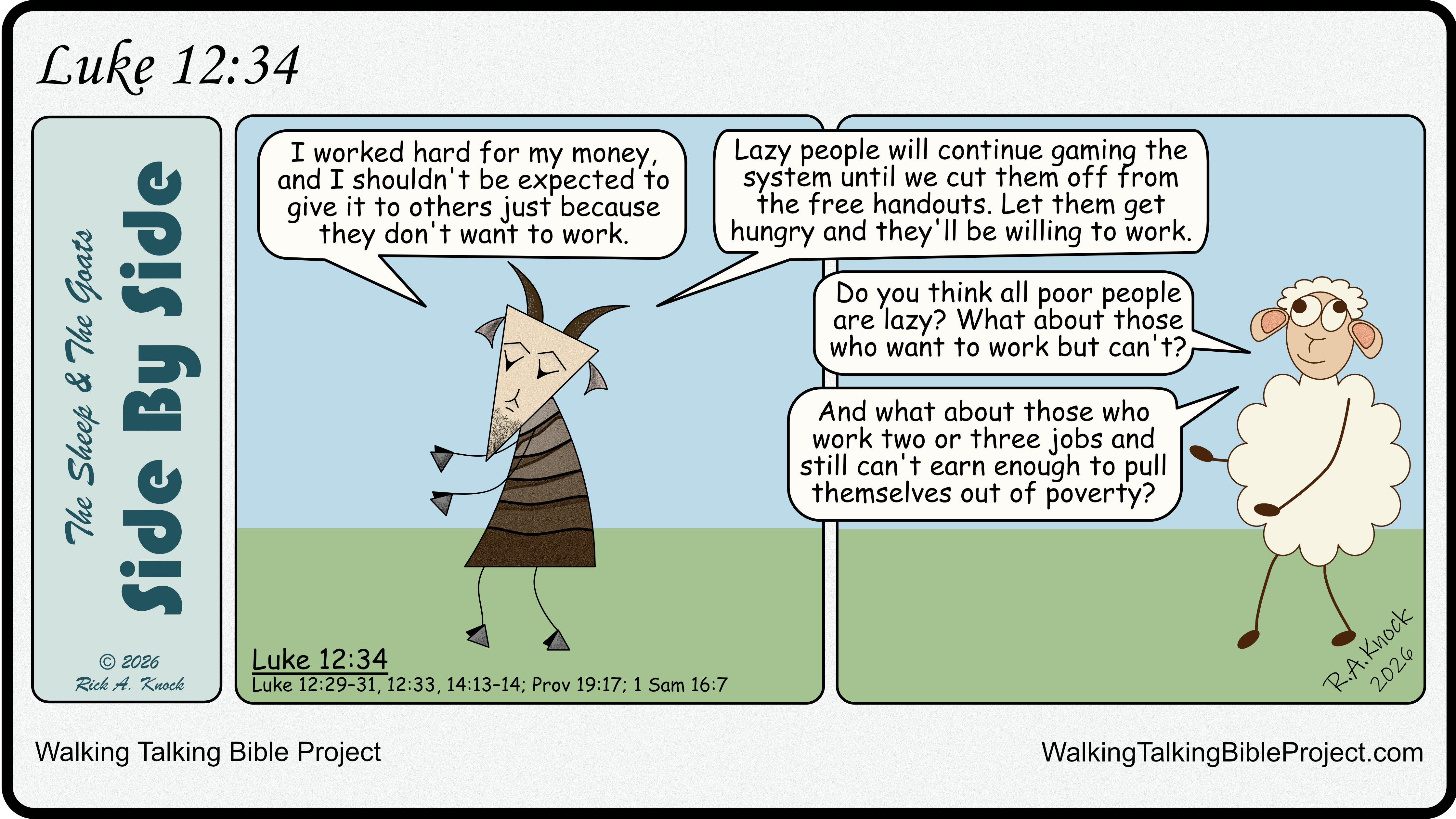
When we care for the poor, who benefits most – the poor, or us? Does caring for the poor change us? If so, in what way? Is Luke 12:31 intended to be taken literally? Why or why not? What about Luke 12:33? What is the connection between giving to the poor and trusting God for our daily needs? These are just some of the questions to consider in this week’s edition of the Walking Talking Bible Project.
Bible Passages
The following Scripture quotations from The Berean Standard Bible (BSB) are provided for your convenience. Please feel free to use the Bible and translation of your choice.
Memory Passage: Luke 12:34
Luke 12:34
34 For where your treasure is, there your heart will be also.
Connection Passage #1: Luke 12:29–31
Luke 12:29–31
29 And do not be concerned about what you will eat or drink. Do not worry about it.
30 For the Gentiles of the world strive after all these things, and your Father knows that you need them.
31 But seek His kingdom, and these things will be added unto you.
Connection Passage #2 Luke 12:33
Luke 12:33
33 Sell your possessions and give to the poor. Provide yourselves with purses that will not wear out, an inexhaustible treasure in heaven, where no thief approaches and no moth destroys.
Connection Passage #3: Luke 14:13–14
Luke 14:13–14
13 But when you host a banquet, invite the poor, the crippled, the lame, and the blind,
14 and you will be blessed. Since they cannot repay you, you will be repaid at the resurrection of the righteous.”
Connection Passage #4: Proverbs 19:17
Proverbs 19:17
17 Kindness to the poor is a loan to the LORD, and He will repay the lender.
Connection Passage #5: 1 Samuel 16:7
1 Samuel 16:7
7 But the LORD said to Samuel, “Do not consider his appearance or height, for I have rejected him; the LORD does not see as man does. For man sees the outward appearance, but the LORD sees the heart.”
The following resources are available on our website:
WTBP Introduction
WTBP Study Guide
Study Guide Instructions
All Scripture quotations, unless otherwise indicated, are taken from The Berean Standard Bible (BSB).